
What’s in the name?
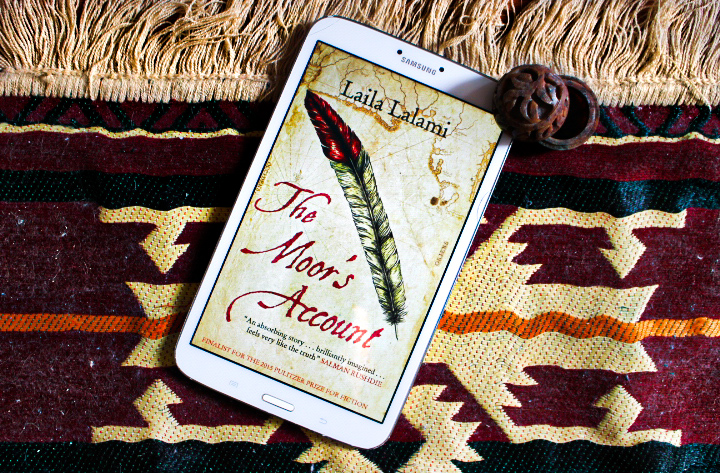
So strives 2015 Pulitzer Prize winner Lila Lalami to answer in her gripping semi-autobiography of Mustafa ibn Muhammad ibn Abdussalam al Zamori or as later renamed by his Spanish owners, Estebanico. And sometimes just “the black”. Lalami challenges normative history by retelling the voyage of the 1527 Narváez Expedition from the perspective of who is assumed to be the first African slave in America.
During the 16th century, a crew of 600 men sailed from Spain to the Gulf Coast of the New World in romanticized hopes of veiled self glory to claim “La Florida” and all the prestige that comes with it for the Spanish crown. Amongst this crew is Estebanico, swept along as a servant for Andrés de Dorantes making him one of only four survivors by the end of this tragic odyssey.
The Moor’s Account, however is not only a story of the turmoil of slavery. It meticulously captures the roller coaster of emotions when thrown into the unknown alone, and the anxious, often catastrophic encounters, between the white Spanish conquistadors, the only black Moorish slave, and the Indigenous people of the New World. Very early on, one can sense a moralistic exploration that drives the story, clothed with lessons of Mustafa’s elders, the passing of oral history in nostalgia for a lost home, and transcendence through the spiritual teachings of faith and nature.
Naming is an important theme in the book, as Lalami highlights the different ways of colonial erasure starting off by the erasure of Mustafa’s name. With that, Mustafa understood how slavery dispossess humans from all value of their existence. The power his name holds from memories to overcoming life trials, his parent’s legacy and his family’s culture, his land, its language, and its traditions, all were violently dismissed – simply erased – the moment he sold himself into slavery. “I could not know that this was just the first of many erasures,” he admits. Estebanico continues, “A name is precious; it carries inside it a language, a history, a set of traditions, a particular way of looking at the world.”
Mustafa’s heisting of agency, stripped him of his voice which is the struggle that is at the heart of this book. Thus, creating two identities of one man; Mustafa the once wealthy merchant and Estebanico the slave reduced in value worse than that of the much beloved horses of the conquistadors. Making Mustafa a character struggling to reconcile this enforced split. Lalami beautifully captures this struggle for self reclamation as Estebanico grapples to decolonize his imposed inferiority and regain not only fragments of the old Mustafa, but arise to become a whole new self. Illuminating a portrayal of character development that documents the ironies and opportunities of the journey to self transformation.
In this process of self making, Lalami cleverly challenges the reader as she later reveals that in an act of redemption and desperation, Mustafa sold himself into slavery, having partook in slave trade himself. Reminding the reader that anyone, regardless of color, religion, sex and gender, is capable of evil, and that one of the distinctive protagonists in the story is the uncontrolled drive for materialistic greed.
Estebanico recalls, “I fell for the magic of numbers and the allure of profit. I was preoccupied only with the price of things and neglected their value … It no longer mattered to me what it was I sold, whether glass or grain, wax or weapons, or even, I am ashamed to say … slaves … telling myself that I had not done anything that others had not done before me.” Ultimately regretting his fathers warnings that “trade would open the door to greed and greed was an inconsiderate guest; it would bring its evil relations with it … But, just as a deaf man cannot heed a warning to watch out for the horse cart, I would not listen to his appeals.”
Unlike conquistadors drowning in doubt and self-destruction of weakened will and panic, Estebanico took solace in the teachings of faith and of his elders. Comforting himself that he must be in this unknown land for a purpose. He recalls his mother once told him, “Nothing new has ever happened to a descendant of Adam … Everything has already been lived and everything has already been told. If only we listened to the stories.” Surviving of off the power of his ancestral oral history, Estebanico convinces himself that he has one thing that was not stolen from him and that is, his story. Vowing to combat every lie that the imperial expedition chronicles, by sharing the truthful accounts of his journey.
And with that, The Moor’s Account is styled as a 16th century Arabic travelogue with Arabic words familiar to Mustafa’s origins, such as the basmala and documentation using the Islamic Hijri calendar adding a unique reading experience.
The Moor’s Account is a story of human desire and its consequences, of redemption and transcendence against betrayal and shame, of the grandeur and force of nature, the competing claims of truth and fallacies, the yearning for freedom, and the search for home.
Check out Lalami’s latest updates on her Instagram as her book made it on HONY! How cool is that?!
Happy Reading!
*A note on Mustafa’s name in this review: The alteration between Mustafa and Estebanico have to do with alternating between the Mustafa before slavery and the Estebanico during and after slavery.
**A guide for book club discussions: Check out Penguin Random House’s recommended questions and topics for discussion on The Moor’s Account Reader’s Guide.
Photo Credit: Salma El Zamel
 Fieldnoted.