Published

American Eagle and Opportunistic Marketing: What Are They Really Taking Advantage of?

This July, American Eagle launched its Fall 2025 campaign featuring a series of short video ads starring Sydney Sweeney under the tagline: “Sydney Sweeney Has Great Jeans, And Now You Can, Too!” The campaign’s primary 30-second ad has already garnered 4.3 million views on Youtube — part of a clear strategy to cement American Eagle’s status “as the #1 jeans brand for Gen Z.”

In a collection of reels and retro aesthetic edits set against a nostalgic backdrop of grainy footage, filtered soft light and analog tech, the campaign features Sweeney in soft, sexually suggestive positions. This includes the actress wiping grease on her back pockets after inspecting her Mustang engine, lying beside a German shepherd puppy on the floor while filming herself with a vintage camcorder, or posing in front of a retro film recorder, as if auditioning. It’s flirty, sultry and intentionally referential. The aesthetic leans heavily on a curated nostalgic oversexualized image of Americana and old Hollywood. In these cases. think denim, trucks, natural beauty, “girl next door” charm.

In her Dr. Squatch body wash ads, Sweeney presents her sexuality as transactional. She uses her body as a tool to capture attention in exchange for consumer engagement. That same performance carries over to the American Eagle campaign, but with a more overt and provocative edge. In one ad, she stands upright and states, “My body’s composition is determined by my genes” as the camera lingers on her cleavage before she coyly instructs the viewer to look up in a flirtatious deflection that underscores how the gaze is both invited and scolded. In the case of this ad the message is to reinforce a carefully crafted tension of nostalgia for an old Hollywood. Think Marlene Monroe, Anne Nicole Smith, or Jayne Mansfield.

The most controversial ad of the campaign, though, gestures to Calvin Klein’s infamous 1980 denim campaign featuring a then-15-year-old Brooke Shields. In the original commercial, Shields is filmed struggling to lift her jeans over her hips, as she lays on the ground reciting to the camera: “The secret of life lies hidden in the genetic code.”  

Fast forward to the American Eagle version, where Sweeny lies on the ground in a cropped denim jacket as the camera slides from her waist to her face. She seductively teases: “Genes are passed down from parent to offspring, often determining traits like hair color, personality, and even eye color. My genes (jeans) are blue.

Continue reading
Standard
Published

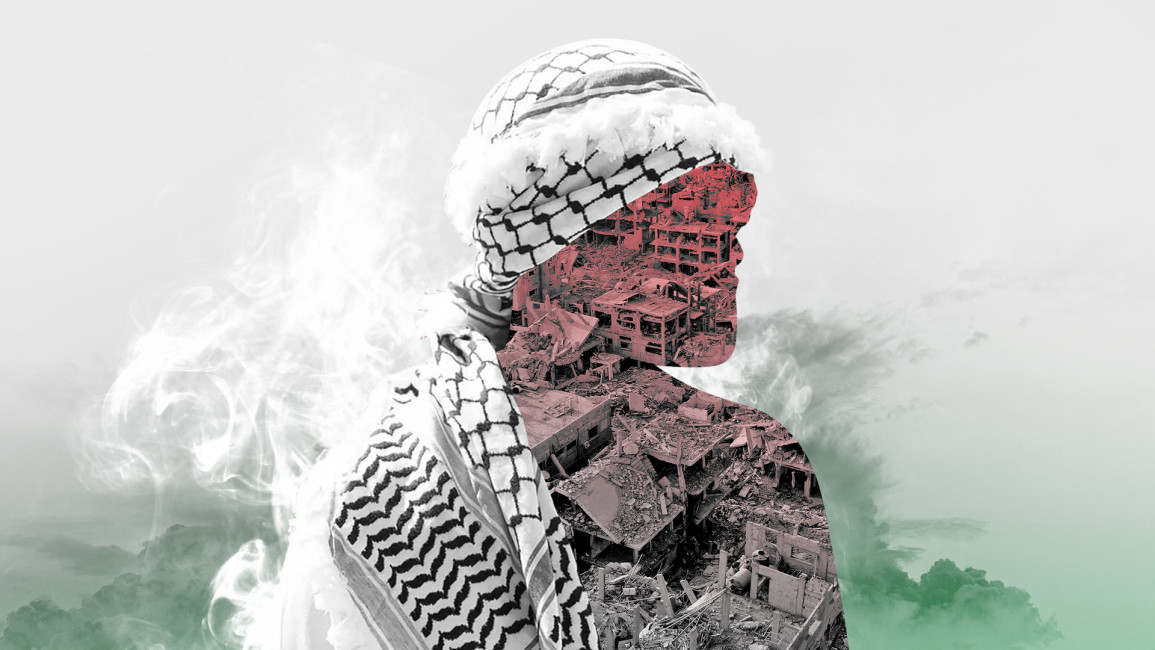
How Do You Console a Palestinian in Gaza Who Lost 30 Family Members in One Night?

Yusuf lost 30 family members overnight, killed in an Israeli bombardment of his neighbourhood in Gaza. “He’s not sure if his parents are alive. He won’t be able to meet you.”

This number — thirty — of Yusuf’s family, a Palestinian producer I networked with, clung to me. A man had just lost thirty family members in a single night. All of them disappeared in the blink of an eye. Are families even that big? Do I have thirty family members?

I raised my fingers and began to count. My parents, my siblings, my cat. My four aunts and their husbands. My cousins. I don’t have uncles, but I do have one grandmother left. Almost all my cousins are married now, so I added their partners. Some have kids — so more fingers folded. I counted the cats and dogs too. The realisation struck me: my family has over thirty members.

Suddenly, thirty wasn’t just a number. It was personal. It had shape and meaning. It was filled with faces, stories, memories and irreplaceable connections.

This disturbing ability to desensitise and normalise the abnormal — both within and beyond our global community — became chillingly apparent to me.

The never-ending imperial violence in the Middle East has not only devastated Palestine, but also shaped the Arab pysche, creating a dangerous sense of fatigue, helplessness, and silence. 

We have to acknowledge this violence for what it creates – a cycle of historical transgenerational trauma that leaves us debilitated. But what if in our acknowledgement, we can finally explore the decolonial means to reclaim our humanisation?

Since the Nakba, Palestinians have faced continuous displacement, dispossession, and massacres. Each time, we are told this destruction is ‘unprecedented,’ yet for us Arab spectators, it is a cruel, ongoing cycle: bombardment, ceasefire, reconstruction — only for it all to be reduced to rubble again.

Displacement, war, autocracy, corruption — all — shape a non-ending cycle of traumatisation and re-traumatisation, compounded by the daily struggles of immigration, health, education, and economic instability in the global Arab diaspora. No wonder we have become fatigued — not just from war, but from compassion itself.

Google ‘compassion fatigue,’ and you’ll find results mostly related to caregivers, healthcare workers, social workers, activists, and journalists. But what about an entire diaspora, collateral damage to decades of continued colonialism?

Middle East Melancholia

To exhaust one’s compassion and will to resist is not solely the result of relentless exposure to oppressions, news and trauma — it is also the stripping away of agency. It is the inability to see the light at the end of the tunnel, leaving nothing but defeatism, inferiority, fear, and humiliation. With the continuous bombardment of systematic psychological, collective, and intellectual violence, we have reached an impasse with a heightened sense of incapability to change the status quo.

Palestinians remain the world’s longest-standing refugee population. Gaza alone housed 1.6 million Palestinian refugees in its 2.4 million population — a population now entirely re-displaced while facing the looming threat of ethnic cleansing via forced dispossession under the Abraham Accords.

In his latest book, Melancholy Act: Defeat and Cultural Critique in the Arab World, academic Nouri Gana explains that the chronic exposure to the collusion of despotism, neocolonialism, and Zionism in the Arab world leads to ‘subjective impasses’ that are morphed by sentiments of shame, guilt, and fear.

This is seen in the crushing depoliticisation of Arab universities that used to be a hub of political activism – now gone silent. The unusual silence of the Arab world has even left Francesca Albanese flabbergasted, as lulled acedia found root in sporadic protests across the region, in contrast to the consistent and loud rumbles of student demonstrations in the West.

These impasses are even reflected in our words, in the way we discuss our region over dinner and casual conversations.

When I reached for my phone, hoping to send Yusuf a message of sympathy, I was struck by how miserably I failed. Every text I typed felt hollow and meaningless, so I deleted them all.

For two days, I remained silent, unable to find words that carried the weight of his loss.

I felt ashamed. Helpless. There is nothing I can say to make the situation better.

A psychological reality that psychology PhD researcher Nadine Hosny and a group of mental health experts at the University of Lausanne, Switzerland, are paying attention to — advocating for the dire need for an intersectional analysis of mental health and cultural post-traumatic stress disorders (CPTSD) in the MENA region and the Arab diaspora.

As I turned to my family and friends for guidance on how to provide support and on what words to lighten the weight of this loss, I became aware of how disappointing, indifferent, and almost insultingly defeatist language we have normalised.

“There’s not much you can do, but pray.” one family member said.

A friend suggested, “Offer your regular condolences. Palestinians have been through this for generations. It’s a reality they know well.”

Another said, “Thank God it’s just 30. I heard of a Palestinian who lost 50” as if grief could be quantified like some macabre competition.

Their responses echoed a sentiment I grew up hearing far too often — a melancholia that pervades discussions of collective suffering in the Arab and Muslim world.

The plight of the Uyghurs in Xinjiang. The displaced Rohingya Muslims. The starving children of Sudan and Yemen. The wars in Afghanistan and Iraq. The oppression in Kashmir. The growing Islamophobia permeates Western borders. Each tragedy met with the same refrain: conditioned, learnt helplessness.

How to Decolonise Healing

Dr. Samah Jabr, Head of the Mental Health Unit at the Palestinian Ministry of Health, explains that learned helplessness is a state in which individuals, overwhelmed by prolonged powerlessness, abandon the hope of changing an unjust reality.

But what if we decide to utilise our generational cycle of traumatisation and choose not to be immobilised by it? How would the re-humanisation of Arabs empower Palestinians and what would it look like?

Decolonial Martiniquais thinker and Frantz Fanon’s mentor, Aimé Césaire, long emphasised the importance of decolonisation through re-humanisation. This is not just a political revolution, but a psychologically and culturally necessary process in reclaiming selfhood.

Decolonial healing is no passive feat — it begins by transforming our melancholic vocabulary into roars.

It means rejecting the language that legitimises our oppression and refusing to refer to the inexplicably brutal deaths of our fellow Palestinians with indifference and apathy. It viscerally acknowledges that this violence is not normal and a state we should not get used to.

Yusuf’s family is just a drop of millions in the sea of Palestinian suffering, but what do we as fellow Arabs do to elevate that suffering? As we found out, the ceasefire is nothing but a breather for the Gazans. In time, the disposition, land theft, and apartheid policies will escalate. Will we continue to wallow in our victimhood, or will we fuel our collective resistance and revival?

Yusuf and I eventually reconnected. There was an unspoken understanding between us. We did not discuss his loss. Instead, we spoke with determination about future projects. Together, we decided to reclaim our agency and honour our ancestral historical trauma through our work.

So, what do you tell a Palestinian who lost thirty family members in one night?

I may never find the perfect words, but silence, I have come to realise, is the cruellest response of all.

*Yusuf is a pseudonym used to protect the person’s identity.

Image Credit: Benjamin Ashraf
Original Publication: 03/25 @TheNewArab

Standard
Published

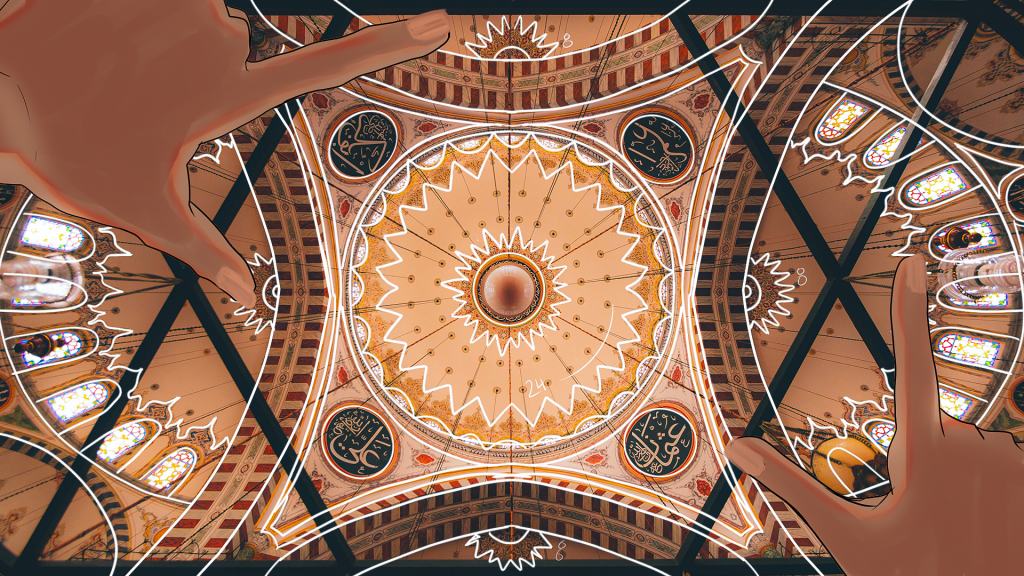
Reversing How We Gaze at Islamic Art

Enter any Muslim household regardless of nationality, and you are bound to come across some representation of Islamic art. Maybe Turkish biomorphic motifs inspired by flowers on a Turkish vase in a kitchen, Moorish tessellations on ceramics varied in geometric patterns and colors in a washroom, or South and Southeast Asian symmetrical wooden Jali carvings on furniture or window screens in a living room. There are also carefully beaded Syrian lamps, and metal carved Egyptian lanterns that may be hung up, reflecting interconnected psychedelic patterns through traveling light. Not to mention Kilim carpets from Persia and Central Asia on the ground, and of course, the intricate portraits of calligraphy that could be passed on generationally crafted on Nigerian and Mauritanian wooden slates or Chinese rice paper. And if you cannot find any such examples, you are bound to come across at least one prayer mat with a classical Qur’an decorated in an outer golden arabesque frame. All of which are representations of vastly diverse history and an amalgam of civilizational influences meshed into daily house usage. 

Islamic art is an essential anthropological component of a Muslim’s life. However, it is often neglected, and its spiritual essence that inspired the mathematical calculations behind its patterns has been shrouded by the materialism of its making. The craft is often taught one-sidedly, focusing on the mathematical science of its techniques and formation without much exploration of the spiritual principles behind its inspiration.

Continue reading
Standard
Published

The Nile: A Tragedy in the Making

In the last five years, we have witnessed the horror of Australia’s wildfires, Indonesia’s tragic Sulawesi earthquake and tsunami, the terror of Hurricane Mathew, the anxiety of the European heatwave, and the growing effects of climate change that is leading to alarming future water shortages. ‘Environmental refugees’ is now a phrase gaining more attention in academic circles and fears of arising wars and conflicts are becoming serious concerns, especially in the continent most stereotyped with scorched dryness—Africa.

Arguably, fostering some of the most fertile soils in the world, Africa embraces the world’s longest river. Often referred to as the “Cradle of Civilization,” the Nile River measures up to 6,700 km. The White Nile and the Blue Nile are the two tributaries of the river, flowing from the Ethiopian highlands, in which both Niles converge at Khartoum, Sudan forming the mainstream river. Ultimately flooding into the Mediterranean Sea forming the Nile Delta at the ends of Egypt.

Since 2011, there has been an increasing interest in the Nile’s water supply mostly due to Ethiopia’s controversial project: the Grand Ethiopian Renaissance Dam (GERD). The dam has multiple concerning demographic and ecological factors that each riparian state—especially Ethiopia, Egypt, and Sudan—is preparing for. According to Okbazghi Yohannes, by 2025, the 10 riparian states are expected to face water scarcity. Political scientist, Aaron Tesfaye, speculates that the population surrounding the river’s basin is expected to harbor 336 million individuals by 2030. Thus, questioning whether the Nile water can support the continent’s agricultural and survival needs for water supply. Aside from population increase, the Nile’s growing ecological degradation is as concerning. Yohannes alarms that the Nile basin is one of 17 watersheds in the world that has lost 90 per cent of its forest cover. Global climate change is most likely increasing the frequency of droughts and floods in the Nile basin.

Continue reading
Standard
Published

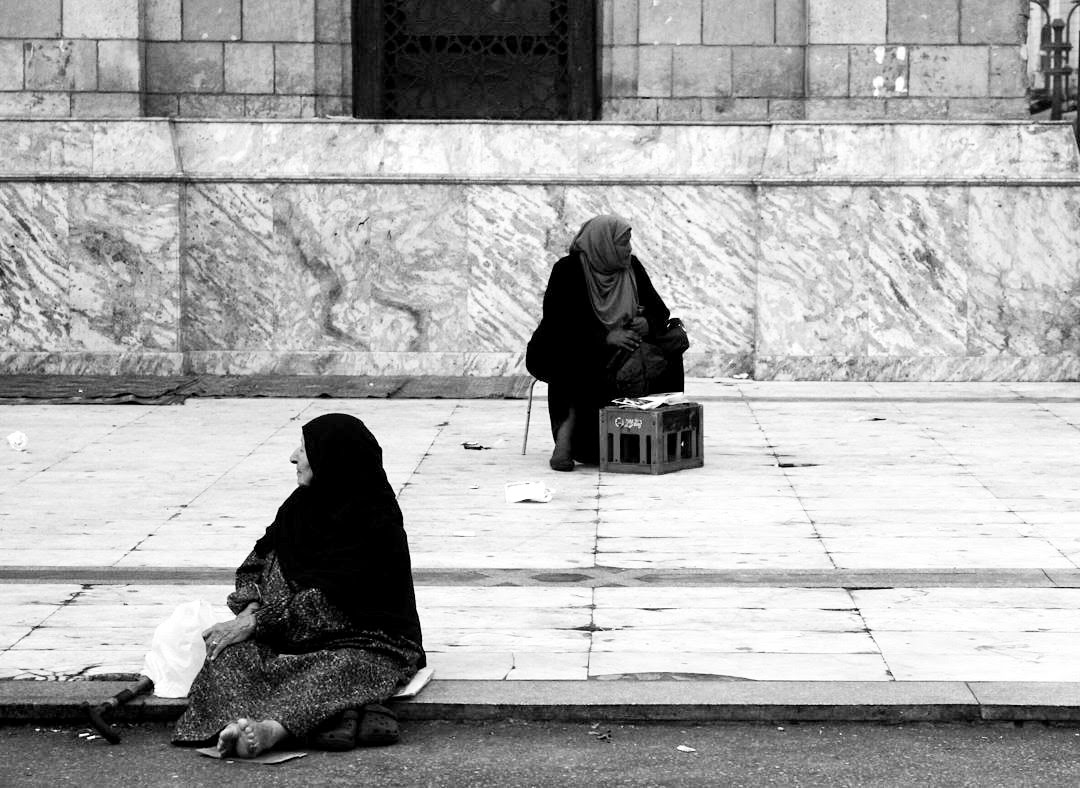
What Happens After a Revolution: Stories From Egypt

It was the summer of 2017 and I had just graduated from my MA in Globalization. It had been 6 years since the Arab Revolutions, and 7 years since my last visit to Egypt. By then I had developed a hobby out of documentary photography and was yearning for a good adventure. I was torn between capturing the aesthetics of Córdoba, Spain or capturing chronicles of everyday life of the long unvisited homeland.

In anthropology, we learn to harness two fundamental tools of communication, the language of the people we are researching and the language of the heart. Given that the latter is a harder skill to cultivate,  knowing Arabic in an Egyptian dialect was my asset for communication in Egypt. And so homeland it was. I packed my very first DSLR and decided to roam Egypt for three months—the longest period of time I have ever spent there. I visited villages, slums, and three cities in an attempt to capture fragments of an Egypt post-revolution.

Continue reading
Standard
Published

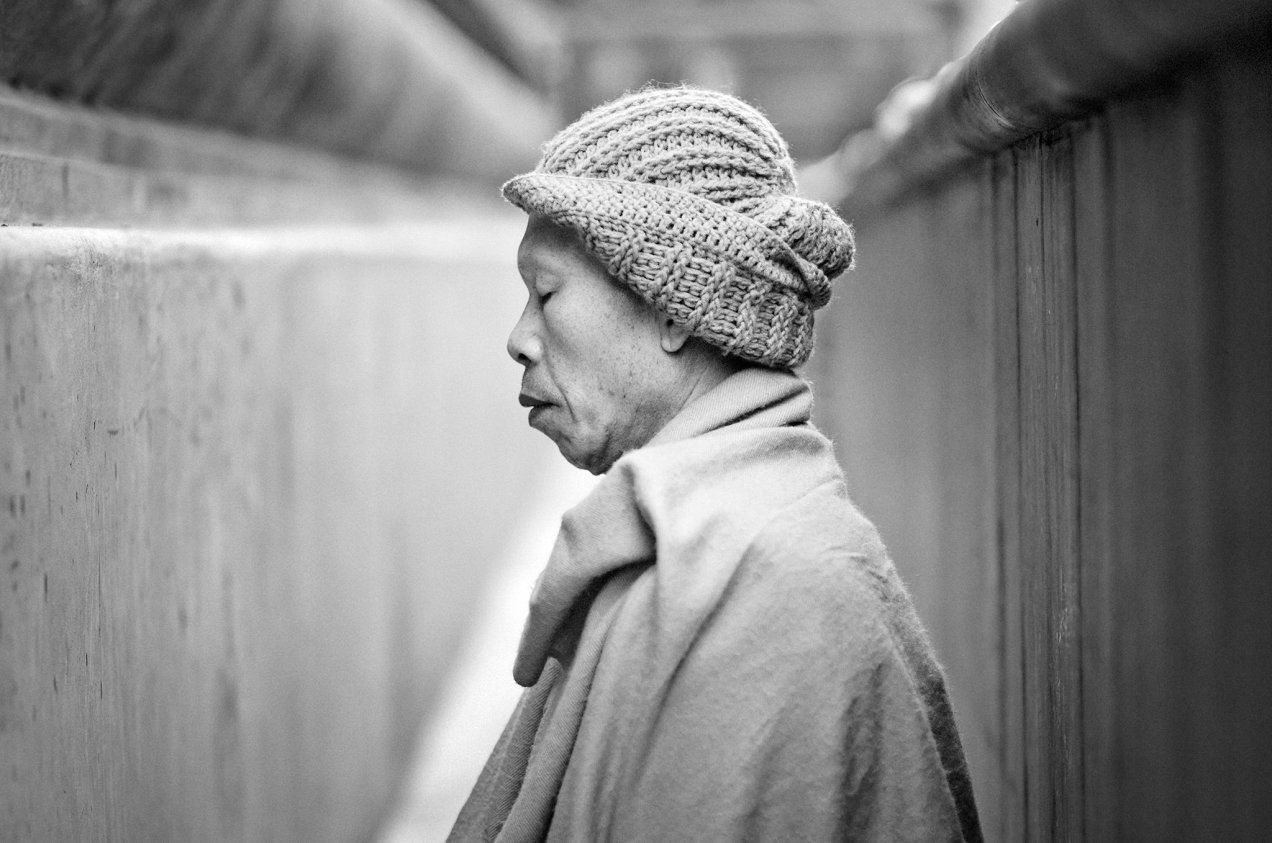
How Are You Still Holding on?

Despair. It lies in the heart of that Syrian girl who clings to the last breathe of her parents as she sits in destruction painted red. Sketched all over the reedy skin and bones of the young boy living in the impoverished outskirts of Congo. It is found where a homeless woman is left freezing on the cold streets of Toronto. Consuming an American man who is broken by the arrogance of some “law enforcer” who has the audacity to think that he is more “civilized” due to a conceived “privileged” colour of his skin.

Despair, is in the halls of schools where students are forced to question their identities by the piercing glares and stinging words of social norms and expectations. It surrounds graduates as they are slapped with their ever growing debt in the market of unemployment. It exists as we chain the capabilities of the disabled when we should be switching mentalities from disable to enable.

It is everywhere. Despair welcomes you and the reasons vary. It never turns you away as it steadily overpowers you. It comes wave after wave. In a sequence of eloquent phases. In persuasive paces. Slowly and gradually the waves develop. Just like the waves of the ocean during a storm. They develop gently and then grow aggressively…immensely…uncontrollably. As the waves of the storm progress, the phases of your despondency steadily swallow you.

Continue reading
Standard